Improved Data Quality
Ensured the most complete, accurate, and reliable data is loaded into the data warehouse for analytics and reporting.
Azati enhanced the Extract, Transform, Load (ETL) process for a healthcare customer by identifying and eliminating issues related to incomplete or inconsistent reference data from multiple operational systems. The customer is a US national leader in customized insurance, claims, and patient safety & risk solutions for healthcare professionals and facilities.
reduction in ETL runtime
increase in data processing capacity
reduction in duplicate or conflicting entries


The customer, a US national leader in healthcare insurance, claims, and patient safety solutions, faced issues with inconsistent and incomplete reference data from multiple operational systems, which caused reporting errors, redundant records, and delays in critical decision-making. Their goal was to ensure that the ETL process delivers the most complete, accurate, and consistent data, prevents overwriting by less reliable sources, eliminates duplicates, and maintains high performance, enabling reliable analytics, reporting, and operational workflows while improving scalability and efficiency.
The ETL process received data from multiple operational systems, some of which provided incomplete or less detailed information. This led to inconsistencies in the data warehouse, causing reporting errors, unreliable analytics, and potential misinformed decisions.
More detailed attribute values from reliable sources were sometimes overwritten by empty or less complete values from other systems, creating duplicate or redundant records. This reduced the overall quality, integrity, and trustworthiness of the data.
The original ETL process had a long runtime, exceeding 30 minutes, which delayed reporting and analytics. Optimizing the process for faster execution without compromising data quality was essential for timely operational insights.
The system needed to easily adapt to new data sources and changing priority rules for attributes. Without a scalable and flexible solution, any modification in data handling could disrupt ETL workflows or require extensive manual intervention.
We began by analyzing all the attributes from every source and assigning priority to each attribute based on the source's reliability and completeness.
We developed a Survivorship Matrix to clearly define whether to keep or overwrite an attribute value based on the source’s priority. This logic was incorporated directly into the ETL process, reducing the need for pre-processing.
By implementing the Survivorship Matrix, we ensured data completeness, consistency, and reliability, while eliminating unnecessary overwriting of values. The approach also increased flexibility, allowing priority values to be easily modified if needed.
We ensured the total running time of the ETL process met performance requirements by reducing the time from over 30 minutes to less than 5 minutes, achieving a significant performance boost.
Bring your complexity. We'll bring the plan. Select a convenient slot to start a conversation with our experts.
Schedule a callA rules-based framework that determines whether to keep or overwrite attribute values from multiple sources based on priority, ensuring consistent and accurate data in the warehouse.
Removes redundant or conflicting data entries, ensuring that only the most complete and reliable information is loaded into the data warehouse.
Assigns priority values to data attributes based on source reliability, improving ETL decision-making and enabling flexible adjustments without process disruption.
Improves ETL runtime by optimizing SQL logic and process flow, allowing large healthcare datasets to be processed efficiently and consistently.
Ensured the most complete, accurate, and reliable data is loaded into the data warehouse for analytics and reporting.
Attribute priority rules can be adjusted easily, supporting scalable and adaptable ETL processes.
Reduced ETL runtime by over 80%, significantly improving operational efficiency and responsiveness.
Eliminated duplicate and conflicting records, improving data integrity for downstream applications.
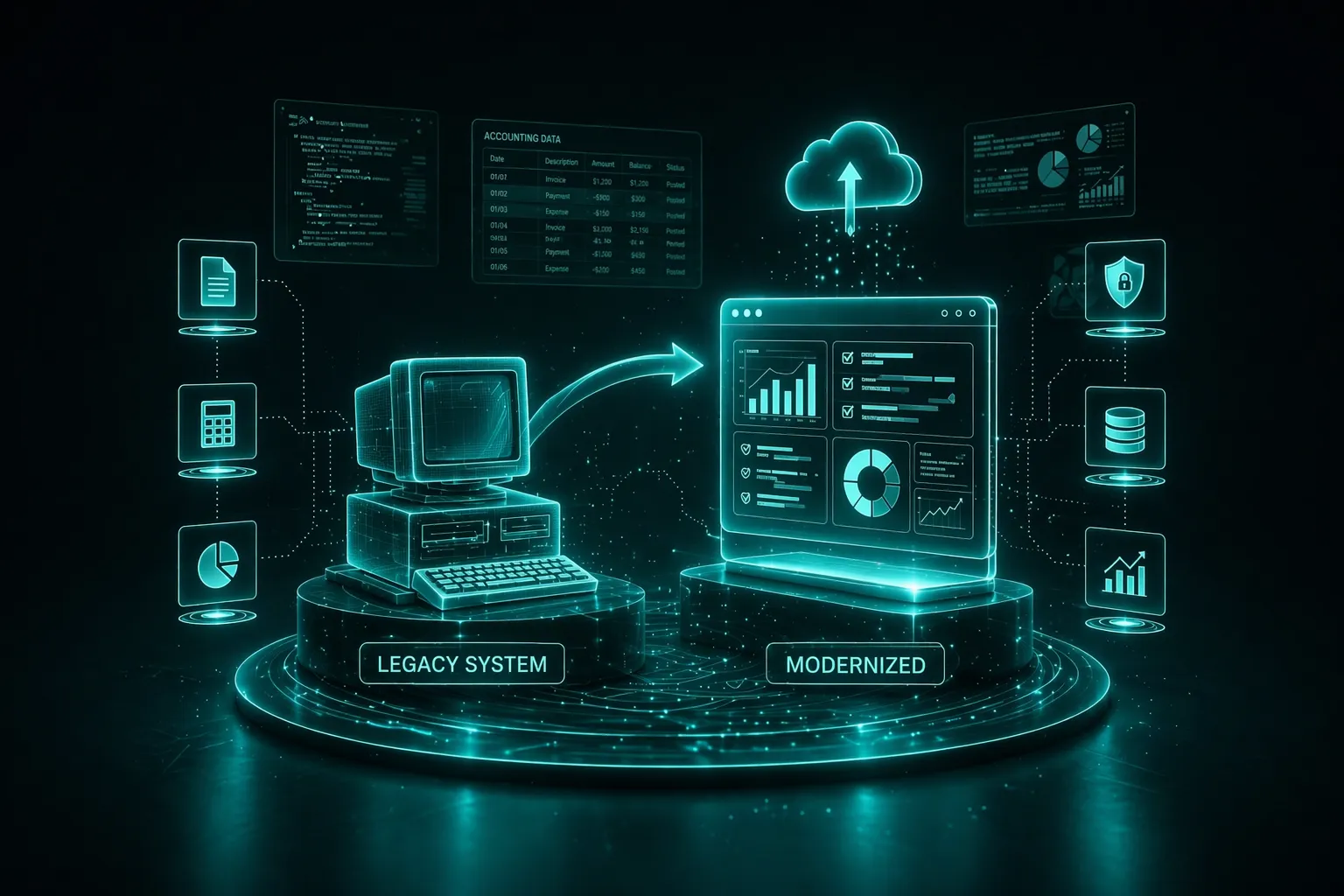
Legacy PHP modernization for a mission-critical insurance accounting app with upgrade without rewrite and infrastructure support.

Managed AI solution that automates invoice and document processing with seamless ERP integration and built-in compliance.

Online application forms automating insurance quote and decision processes.

Automated tool generating personalized insurance promotional materials.

Integrated CRM system with Master Data Management optimization.

Automated ML-powered assistant for insurance policy application decisions.
Last updated