Reduced Manual Effort
Automated reading of meter data decreased the need for human operators and reduced errors.
Azati developed an AI-powered service for a Canadian oil & gas customer to automate the reading and processing of data from meters that measure produced oil & gas resources. The service used machine learning and computer vision technologies to extract valuable information from scanned graphs, barcodes, and handwritten notes.
barcode/label processing accuracy
faster data-ingestion throughput
reduction in manual correction workload


The customer faced inefficiency and human errors when manually reading data from meters, which include scanned graphs, barcodes, and handwritten notes. Azati’s goal was to automate the data extraction process, increase accuracy, and reduce the dependency on manual intervention.
The equipment printed data on round discs, which were scanned and sent to the system for reading and processing. Azati developed an algorithm to unfold the round disk and convert the image into a rectangular format to trace and read the coordinates of the curves accurately.
The graphs contained multiple curves with different colors, sometimes overlapping with the background. Azati trained a neural network to accurately select and highlight curves of different colors, even when extraneous interference occurred, ensuring accurate reading of each curve.
The customer had multiple partners using different types of equipment, generating data in various formats. Azati created a neural network that identified the input data's format, categorized it, and routed it to the correct data processor for processing.
Handwritten data, such as dates and numbers, presented challenges due to variability in legibility. Azati used Google Tesseract along with a trained neural network to recognize handwritten data from multiple regions of the scanned images, overcoming issues caused by human factors like haste or poor handwriting.
The project began with the creation of a pilot prototype for reading curves on the graphs. After successfully achieving this, Azati expanded the system to recognize and process additional aspects of the input data, including barcodes and handwritten notes.
Azati maintained continuous communication with the Canadian team for project management, prioritization, and delivery schedule coordination. This ensured that the project goals and timeline were aligned with the client’s expectations.
The development process followed an iterative model, with data recognition services being built and tested in parallel according to the schedule agreed upon with the client. The team worked to refine the recognition accuracy with each iteration.
Bring your complexity. We'll bring the plan. Select a convenient slot to start a conversation with our experts.
Schedule a callThe system detects and reads barcodes from scanned images with over 90% accuracy. This ensures that critical information, such as equipment IDs and labels, is reliably extracted for processing and reporting.
Curves on meter graphs are processed with over 80% accuracy. Neural networks identify each curve's coordinates and distinguish overlapping lines, allowing extraction of key performance metrics.
The solution recognizes handwritten numbers and dates from scanned images using Tesseract and custom neural networks. Accuracy depends on input quality, ranging from 30% to over 70%, significantly reducing manual data entry.
The system identifies the input data format and automatically routes it to the appropriate processing pipeline, accommodating diverse equipment outputs from multiple partners.
Automated reading of meter data decreased the need for human operators and reduced errors.
High-accuracy recognition of curves, barcodes, and handwriting increased reliability of operational data.
Faster data processing improved decision-making and resource tracking for oil & gas operations.
The solution accommodates multiple equipment types and data formats, ensuring scalability across partners.
Handwriting recognition improvements and pipeline automation set the stage for fully digital workflows.
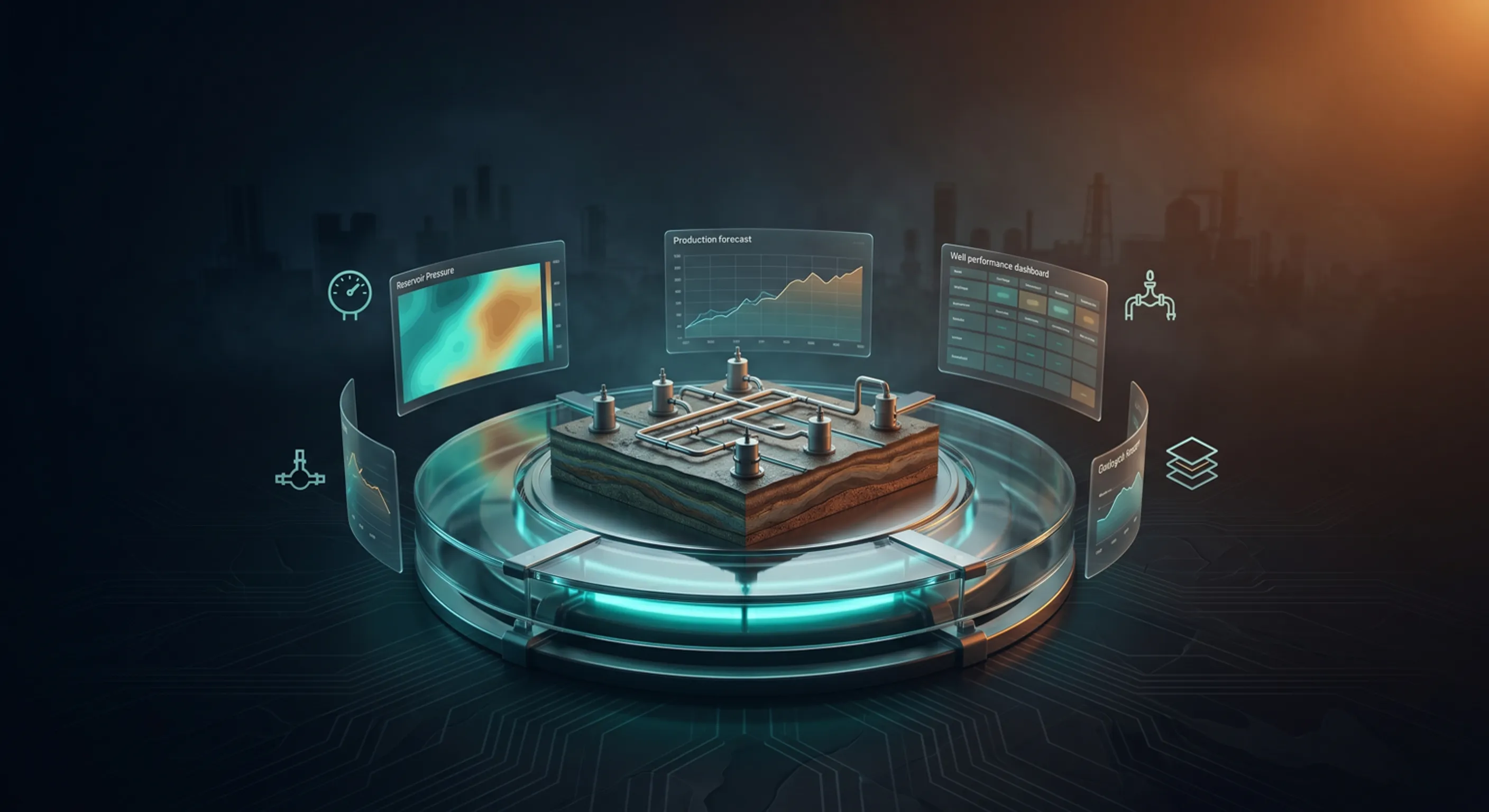
Oilfield reservoir analytics platform with 4 modules in 4 months, computational core rebuilt in 10 days, and ~1000X reduction in numerical precision loss after enterprise QA.
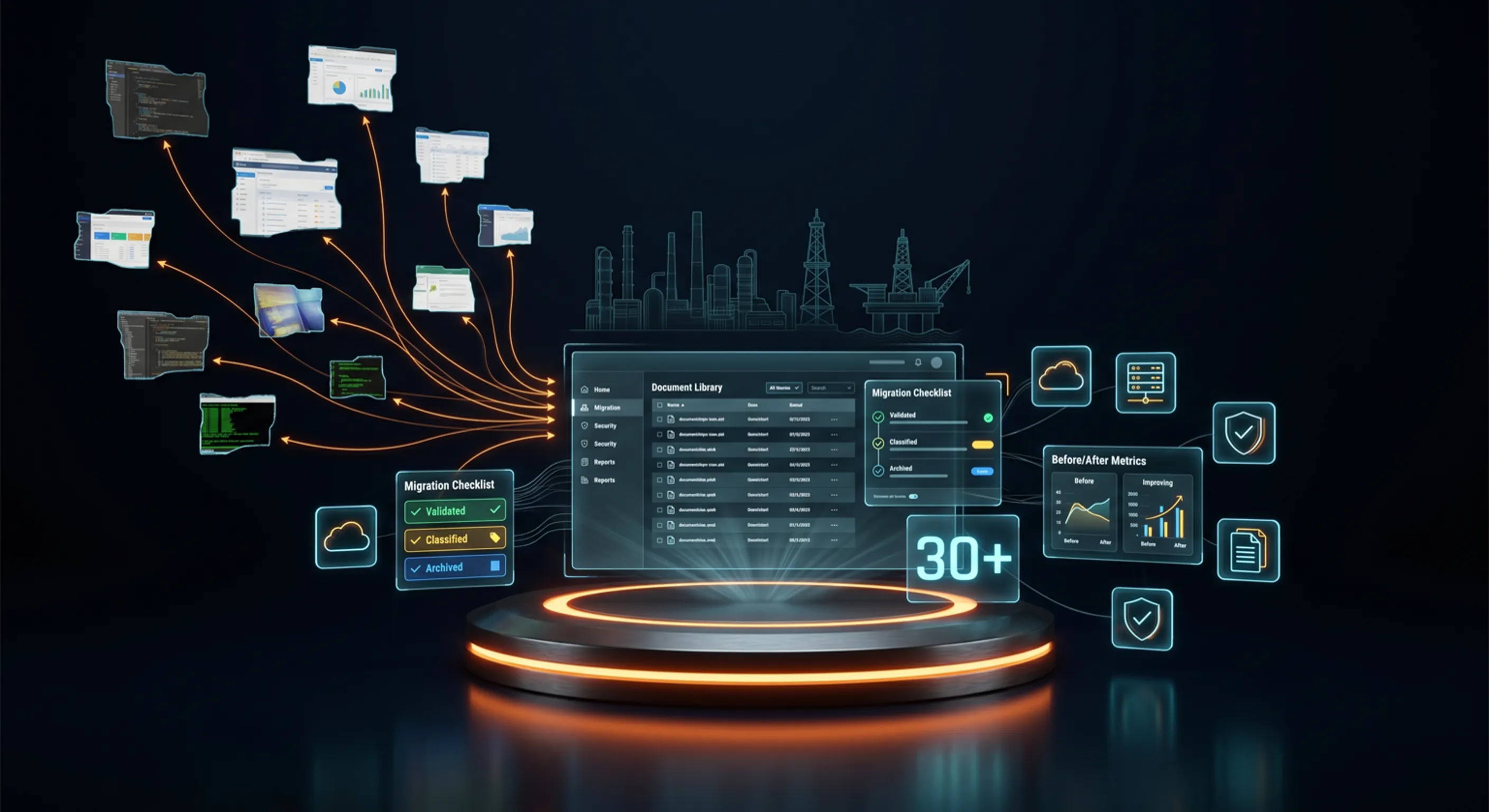
Sharepoint migration and portal consolidation for oil and gas, 30+ portals consolidated, 100,000+ content entities migrated, 15%+ customizations beyond initial estimation.
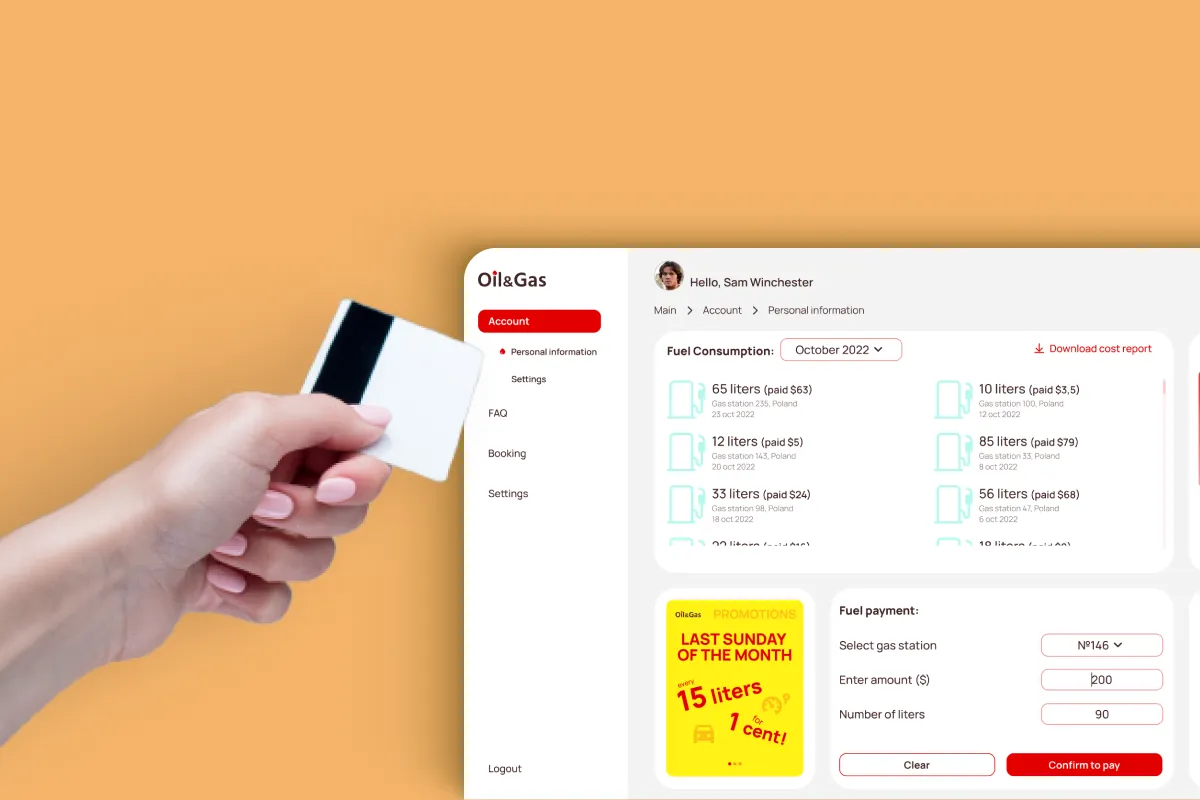
Optimized Oil&Gas web platform with streamlined workflow and fuel card management.

Data bus integrating SAP ERP with document generation for optimized workflows.
AI-powered document digitization system for engineering documents.
Last updated