Accelerated Research
Enabled researchers to perform multi-sequence queries significantly faster, reducing project timelines and increasing the speed of genetic discovery.
A life science portal was enhanced with powerful multi-sequence search functionality, enabling researchers to query multiple nucleotide or peptide sequences simultaneously across comprehensive biological databases.
increase in relevant multi-sequence hits identified per search
improvement in accuracy of patent sequence identification
increase in researcher productivity


The client approached Azati to reduce the time and effort required for multi-sequence analysis, improve the accuracy and relevance of search results, and automate the comparison of multiple nucleotide or protein sequences across large biological databases. The goal was to streamline research workflows, minimize manual errors, and enable scientists to efficiently identify complex genetic patterns and alignments.
Biological scientists needed a tool to search for multiple nucleotide or protein sequences at once, which was critical for identifying CDRs, chimeric constructs, and recombinant plasmids. At the time, no such tool existed in the market. Azati proposed the design and development of a new multiple sequence search feature from scratch.
Researchers lacked the ability to correlate multiple sequences across various claims within the same patent document, limiting the accuracy and depth of results. Azati addressed this by building an advanced scoring system and enhanced interface to ensure precise multi-alignment tracking.
Analyzed the client’s domain-specific needs for multi-sequence comparisons and patent research workflows.
Designed and developed the Multiple Sequence Search (MSS) engine capable of processing up to six sequence inputs simultaneously.
Implemented enhanced Smith-Waterman algorithm for high-performance, GPU-accelerated matching with 30–50x speed improvement.
Created a scoring and ranking system to prioritize documents with multiple matching sequences.
Developed a user-friendly interface with support for combined alignment view and four exportable report formats.
Integrated the tool into the client’s existing bioinformatics portal, ensuring seamless access and compatibility.
Bring your complexity. We'll bring the plan. Select a convenient slot to start a conversation with our experts.
Schedule a callSupports simultaneous input of up to six nucleotide or protein sequences, allowing researchers to run complex queries efficiently. This improves productivity by reducing the time needed for sequential searches and enables simultaneous comparison of related genetic sequences.
Ranks search results based on the number of matching sequences and key alignments. Documents containing multiple hits are prioritized, ensuring that researchers focus on the most relevant results. The scoring system enhances accuracy and relevance for complex genetic research.
Implements an optimized Smith-Waterman algorithm with NVIDIA CUDA GPU acceleration, achieving up to 50x faster sequence alignment without compromising accuracy. Enables high-performance processing of large sequence datasets for rapid genetic research.
Allows correlation of multiple sequences within single or multiple patent documents. Researchers can detect overlapping claims and track complex genetic constructs across patents, improving intellectual property analysis and scientific discovery.
Generates search results in four different report formats with detailed alignment views. Reports can be shared with collaborators or integrated into laboratory workflows, supporting reproducibility and collaboration.
Provides an intuitive interface for visualizing multi-sequence alignments and tracking search progress. Researchers can quickly interpret results, toggle between combined or individual sequence views, and navigate efficiently between datasets.
Enabled researchers to perform multi-sequence queries significantly faster, reducing project timelines and increasing the speed of genetic discovery.
Advanced scoring and GPU-accelerated alignments improved precision in identifying relevant genetic sequences and patent claims.
Exportable reports and a user-friendly interface simplified data interpretation and collaboration, streamlining daily research activities.
Multi-sequence patent correlation allowed scientists to identify overlapping sequences and track complex genetic constructs across claims, improving IP research and compliance.
High-performance GPU processing reduced computational overhead, allowing teams to focus on analysis rather than waiting for results.

AI platform transforming patent and sequence data into actionable insights with advanced AI modules.

AI-powered calorie counting app estimating dish calories through image analysis.
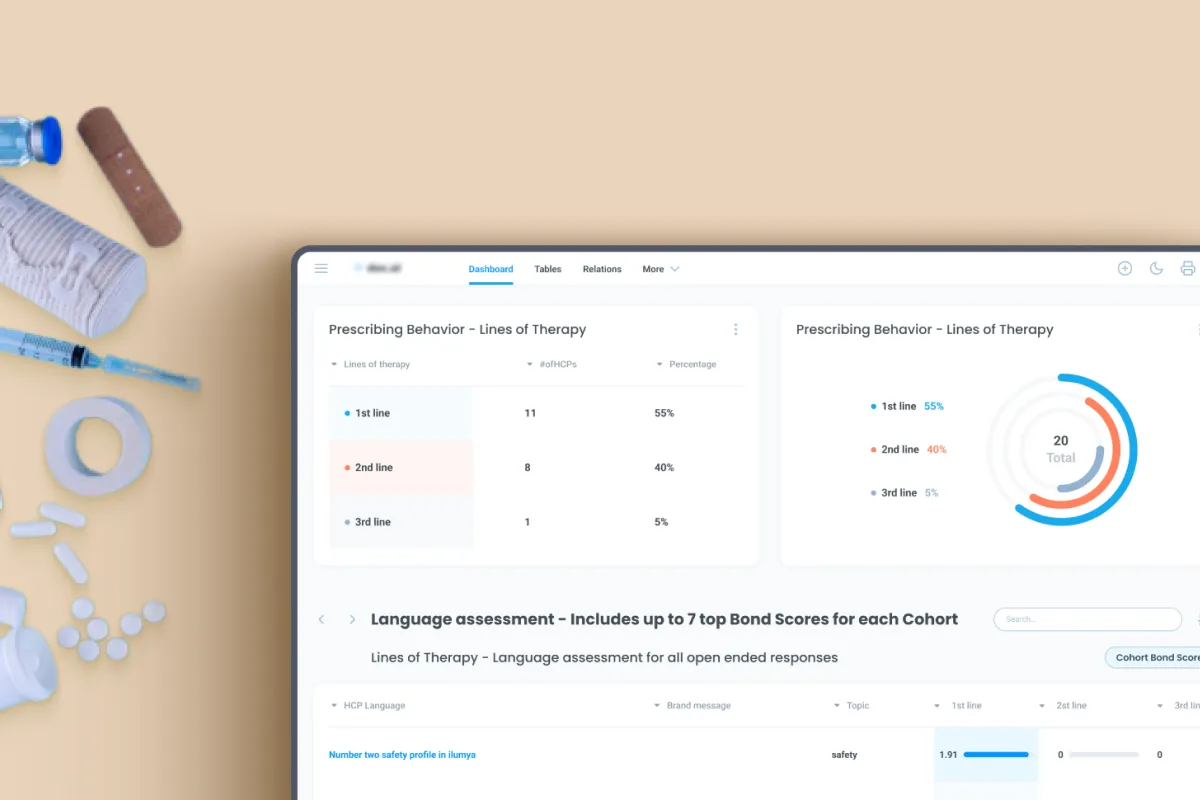
AI and Computer Vision solution for automated pharmaceutical marketing assessment reports.

Merged healthcare solutions with enhanced UI and optimized business processes.
Online data source for sequence information and IP search needs.
ML-powered semantic search engine for complex scientific datasets.
Last updated