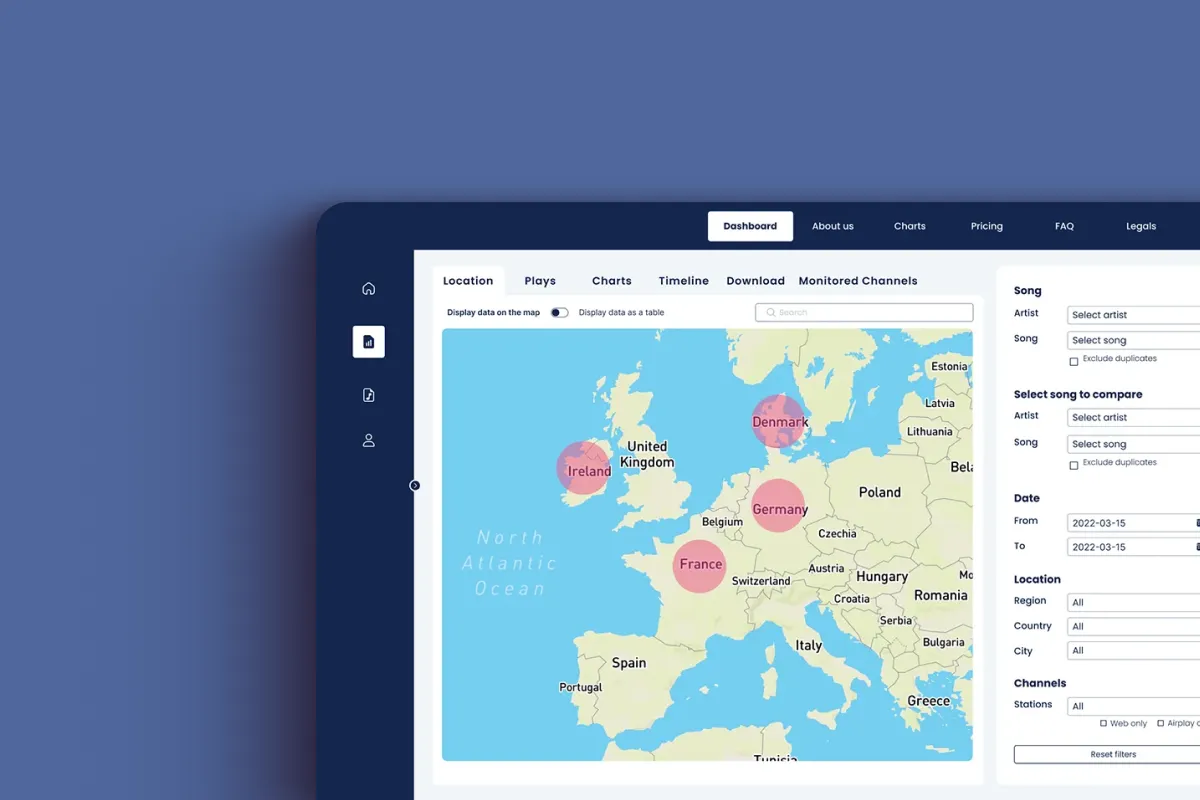
Integrated AI Platform for Sports Data Management and Analytics

Azati designed and implemented a large-scale AI-driven platform for the International Sport Organization to centralize, normalize, and govern athlete and sports event data. The solution automates data ingestion, conflict resolution, monitoring, and lifecycle management, significantly improving data accuracy, governance, and operational efficiency across millions of records.

Discuss an idea
5M+

athlete and event records ingested and normalized

70%

reduction in manual oversight through automation

92%

accuracy in semantic search and AI-assisted summarization

All Technologies Used

React
React
Angular
Angular
.NET Core
.NET Core
Java Spring Boot
Java Spring Boot
PostgreSQL
PostgreSQL
Docker
Docker
Kubernetes
Kubernetes
AWS
AWS
Apache Spark
Apache Spark
Elasticsearch
Elasticsearch

Motivation

The client needed a scalable and intelligent platform to manage rapidly growing volumes of athlete and sports event data coming from heterogeneous sources. The goal was to ensure data consistency, automate validation and conflict resolution, enable semantic search, and provide reliable governance for operational decision-making, reporting, and global data distribution.

Main Challenges

Challenge 01
High Volume and Heterogeneous Data Sources

Sports data arrived from numerous internal and external sources in different formats, including live feeds, APIs, CSV, XML, HTML pages, and historical archives. This diversity made ingestion, normalization, and integration difficult and required highly scalable, fault-tolerant ETL pipelines.

#1
Challenge 02
Incomplete Metadata and Fragmented Context

Inconsistent naming conventions, missing identifiers, and incomplete metadata prevented reliable linking of athletes, events, and competitions across datasets, limiting cross-event analytics and historical tracking.

#2
Challenge 03
Manual Data Validation and Conflict Resolution

Internal teams manually reviewed updates, reconciled conflicts, and corrected errors, which was time-consuming, error-prone, and delayed data availability for analysts and partners.

#3
Challenge 04
Lack of Automated Monitoring and Alerts

The absence of proactive monitoring and notifications forced administrators to manually check data changes, making it difficult to quickly detect anomalies, updates, or quality issues.

#4

Our Approach

Scalable ETL and Data Normalization
Built distributed ETL pipelines capable of batch and streaming ingestion to normalize and enrich data from heterogeneous sources at terabyte scale.
Microservices-Based Architecture
Designed modular, containerized microservices to handle data linking, lifecycle management, enrichment, and AI-assisted processing with horizontal scalability.
AI-Assisted Data Enrichment
Applied NLP, embeddings, and custom ML models to enhance metadata, resolve ambiguities, support semantic search, and generate AI-assisted summaries.
Governance, Auditability, and Compliance
Introduced full lifecycle tracking, versioning, conflict comparison, and approval workflows to ensure transparency, accountability, and compliance.
User-Centric Search and Visualization
Developed intuitive web interfaces for semantic search, monitoring, and reporting to support analysts, moderators, and external stakeholders.

Want a similar solution?

Just tell us about your project and we'll get back to you with a free consultation.

Schedule a call

Solution

01

Unified Data Capture and Normalization

Centralizes sports event and athlete data from heterogeneous sources, including live feeds, official results, media outlets, and historical databases. Performs automated ingestion, normalization, and enrichment to produce high-quality structured datasets.
Key capabilities:
  • Multi-format ingestion (HTML, JSON, CSV, XML)
  • Automated deduplication and standardization
  • Batch and streaming ETL pipelines
  • Error handling and ingestion notifications
02

Smart Microservices Layer

Handles event and athlete data linking, deduplication, lifecycle management, and AI-assisted summarization. Services are modular, containerized, and communicate via messaging systems to ensure scalability and reliability.
Key capabilities:
  • Stateless, containerized services
  • REST and GraphQL APIs with RBAC
  • AI-assisted tagging and enrichment
  • Event-driven real-time updates
03

Interactive Search and Visualization

Web-based interfaces for advanced search, monitoring, and reporting. Users can perform natural-language or structured parameter-based searches, view previews, detailed narratives, and cross-referenced information.
Key capabilities:
  • Semantic and parameter-based search
  • Natural-language queries
  • Rich previews and cross-references
  • User-friendly navigation and reporting
04

Data Governance and Integrity Hub

Tracks changes to athlete profiles and event records, detects conflicts, and supports side-by-side comparison for resolution. Ensures data consistency, lifecycle control, and compliance.
Key capabilities:
  • Versioning and lifecycle tracking
  • Conflict detection and side-by-side comparison
  • Approval workflows
  • Full audit trails
05

Monitoring, Alerts, and Performance Control

Delivers alerts for updates, anomalies, or conflicts via multiple channels, keeping users informed and responsive.
Key capabilities:
  • Event-driven alerts and subscriptions
  • Centralized logging and monitoring
  • Anomaly detection and escalation
  • Dynamic cloud scaling

Business Value

Operational Efficiency: Automated monitoring reduced manual oversight by more than 70%.

High Data Accuracy: Over 5 million athlete and event records normalized with 92% semantic search accuracy.

Improved Accessibility: Faster and more relevant data retrieval for analysts and partners.

Strong Governance: Full audit trails and lifecycle control ensured compliance and trust.

Scalable Foundation: Modular architecture supports future integrations and expansion.

Ready To Get Started

This site is protected by reCAPTCHA and the Google Privacy Policy and Terms of Service apply.