Successful Microservice Migration
Transitioned from monolithic to microservice architecture, increasing system scalability and deployment efficiency.
Azati contributed to the development of a modern banking system for a financial institution. The solution targets small and medium-sized businesses, providing tools for payment creation across various channels, account and card information display, financial transaction history, and report generation in multiple formats.
reduction in manual payment processing errors
faster SME payment settlement time
increase in SME user adoption within the first quarter


The client needed a modern banking platform for SMEs because their legacy monolithic system was inflexible, caused performance bottlenecks, and lacked tools for efficient payment processing, account management, and reporting. The goal was to deliver a scalable, resilient, and high-performance system that could handle increasing transaction volumes, improve operational efficiency, and ensure uninterrupted service during peak financial periods.
The legacy monolithic architecture limited flexibility and scalability. Azati led the migration to a microservices-based structure, significantly enhancing modularity and performance.
The system had to maintain high availability and reliability, especially during peak times such as tax periods and holidays. Load testing and incident response processes were established to ensure readiness.
The system scaled from processing 10,000 payments per month to over 1 million per day. Performance optimization and architecture redesign were key to supporting this growth.
As a Team Lead, Azati’s specialist managed sprint planning, task distribution, and technical supervision across a cross-functional team of 5 developers, 2 QA engineers, 2 PMs, and 1 architect, ensuring timely delivery and smooth collaboration.
Led the development of new features, maintained and refactored legacy code, and performed deep system optimizations to improve performance, scalability, and reliability under high-load conditions.
Ensured code quality and alignment with business needs through systematic code reviews, validation against requirements, and close collaboration with product stakeholders.
Maintained direct communication with the client to resolve production issues, provide rapid incident response, and support critical operations without service interruptions.
Worked closely with the system architect to define and implement scalable, modular solutions, shared across multiple teams, enabling smooth transition to microservices and improved system flexibility.
Bring your complexity. We'll bring the plan. Select a convenient slot to start a conversation with our experts.
Schedule a callEnables SMEs to create and manage payment orders across various channels, streamlining financial operations and providing flexible tools for different payment types.
Provides users with up-to-date account balances, card details, and comprehensive transaction history, improving transparency and control over financial data.
Allows generation of detailed financial reports in multiple formats for internal management and regulatory compliance, enabling faster insights and decision-making.
Refactored the platform from a monolithic system to microservices, improving scalability, deployment flexibility, and fault isolation, supporting rapid feature growth.
Integrated Apache Kafka and MQ solutions to enable reliable asynchronous communication and ensure smooth transaction processing under high load.
24/7 monitoring and incident management to ensure system stability, rapid response to issues, and uninterrupted financial services for SMEs.
Transitioned from monolithic to microservice architecture, increasing system scalability and deployment efficiency.
Improved system resilience, reduced production incidents, and ensured uninterrupted financial services.
Prepared the system for peak seasons, enabling smooth operation during high-traffic periods like tax payouts.
Streamlined development and testing workflows, reducing release times and improving delivery speed.
Scaled the system from 10,000 monthly payments to over 1 million daily, showcasing robust architectural evolution.
Migrated the system to Java 17 and replaced foreign software with domestic alternatives, aligning with import substitution initiatives.

Production-grade algorithmic trading platform for a US prop firm: 5x faster backtesting, 2x PnL growth, and drawdown cut from 35% to 21% after ML-based risk management went live.

Azati stabilized and extended a broken Pact Broker, shipped enterprise features, and brought a stalled contract testing initiative to production.

AI orchestration layer that automates banking claims and loan amendment workflows across legacy systems while maintaining compliance and human oversight.
Automated problem management system using Jira with dashboards and real-time insights.
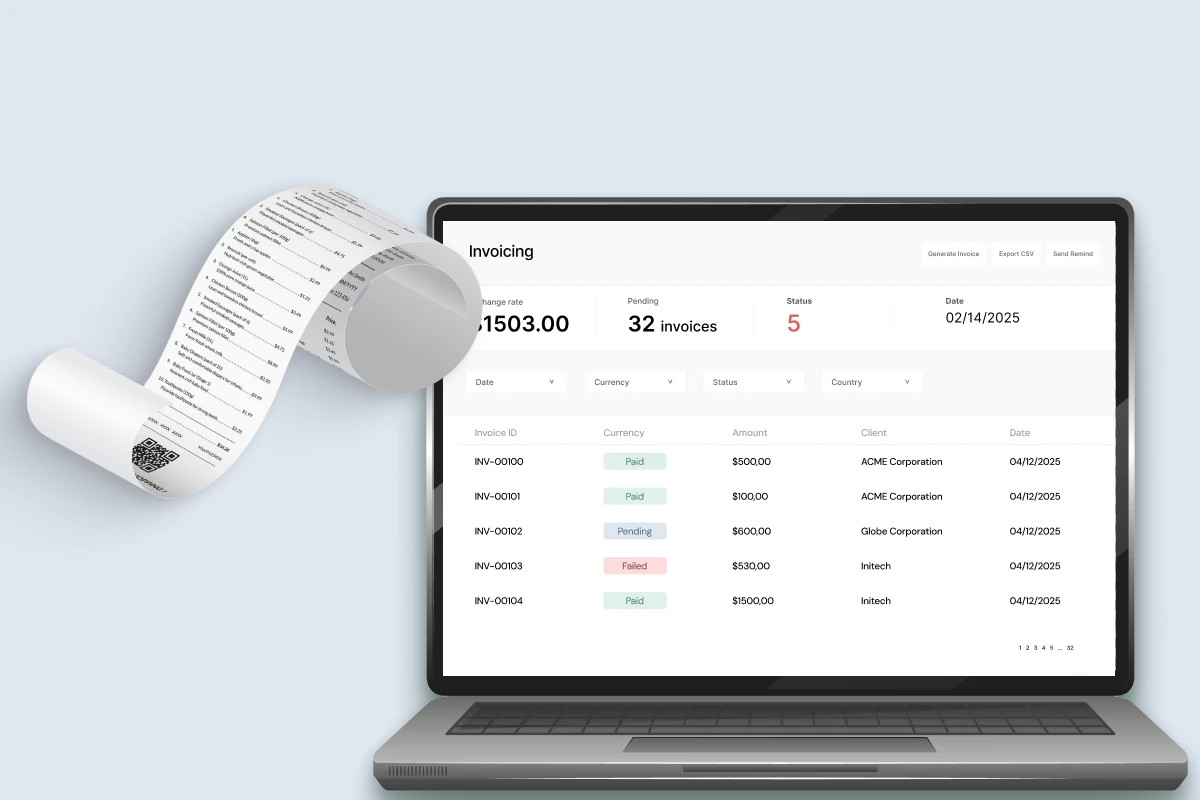
Billing management system with payment gateway integration and automated invoicing.

Modernized banking services with enhanced warehouse operations and improved system integration.
Last updated