Legacy Accounting System Modernization
⚡ Pain Points We Tackled
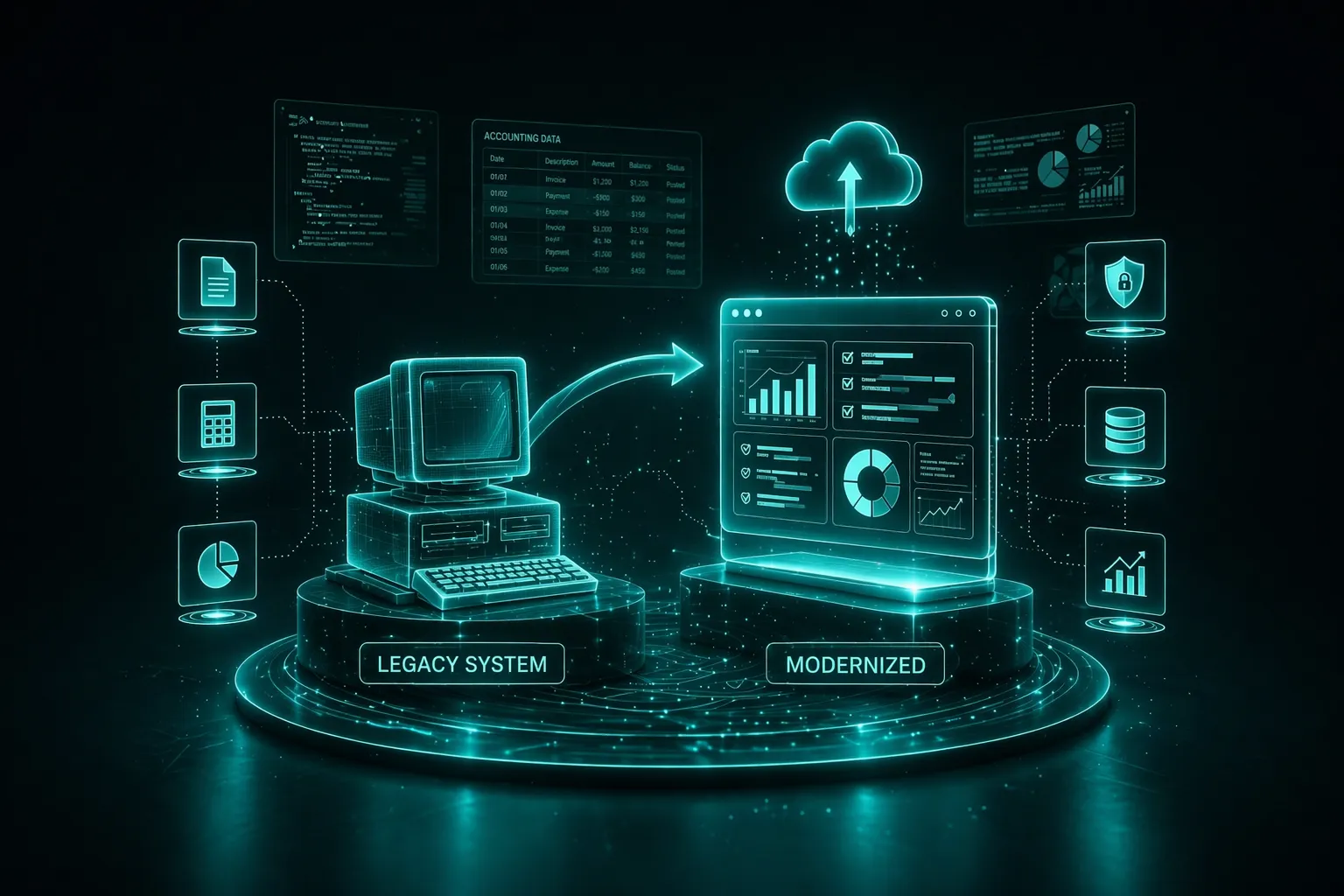
The client relied on a legacy accounting system built on outdated PHP architecture, which limited scalability, slowed down performance, and required significant manual effort for routine operations. The system struggled with a rigid monolithic structure, slow data processing and reporting, high dependency on manual workflows, and difficulty integrating with modern tools and services. Any attempt to modernize carried a high risk of disruption to business-critical financial operations.
Our Approach
Azati re-architected the legacy system into a modern, modular platform, ensuring continuity of operations while enabling future scalability and AI readiness. The modernization strategy focused on gradual refactoring instead of full replacement, introducing API-based integrations, improving data processing pipelines, and preserving business logic while upgrading architecture. The transition went without downtime, allowing the client to continue operations seamlessly.
Applied Methods and Practices
- Incremental modernization: Refactored the monolithic system step by step to reduce risk and avoid downtime.
- API layer introduction: Built REST APIs to enable integration with external systems and future AI components.
- Data workflow optimization: Improved data handling and processing speed across accounting operations.
- Manual process reduction: Identified and automated repetitive accounting tasks to reduce operational overhead.
- System stabilization: Ensured consistent performance and reliability during and after modernization.
Solution Features
- Modernized Architecture: Transition from a legacy monolith to a more flexible, maintainable system architecture.
- Improved performance: Faster data processing and reporting across accounting workflows.
- Integration-ready platform: API-first approach enabling future integrations and AI adoption.
- Reduced operational load: Less manual work required for routine accounting processes.
- Zero-downtime migration: Continuous system availability during the entire modernization process.